
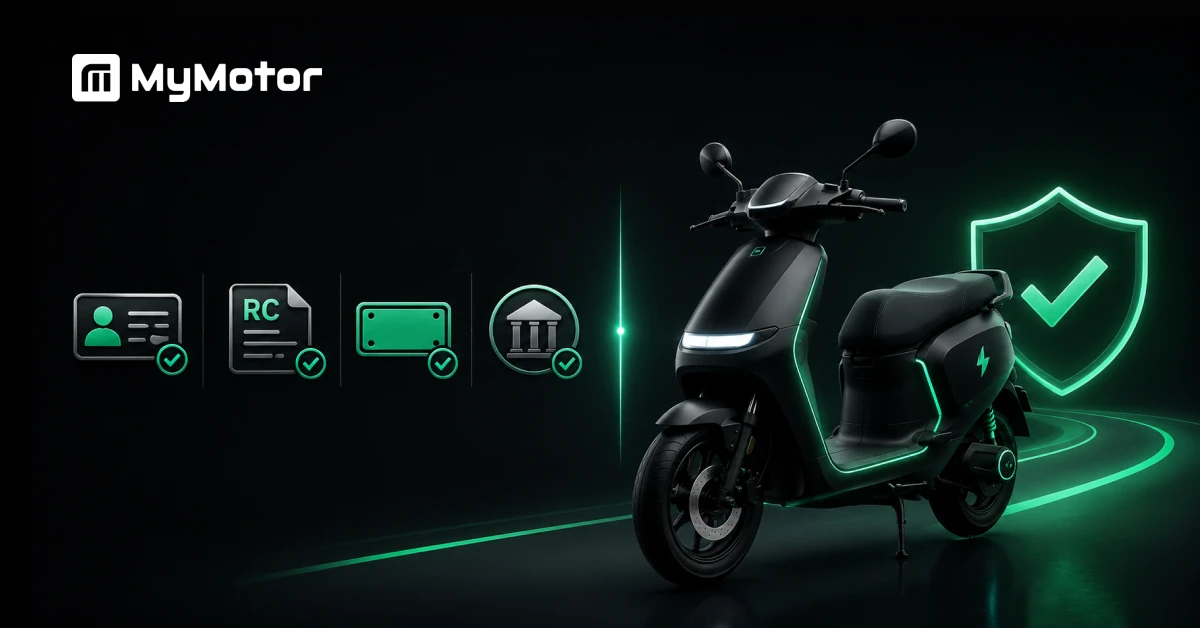
Electric bikes are quite easy to ride, cheaper to run and a smart choice for daily travel. Charging is easier than ever too, with more public charging points opening up every year - you can find the nearest one using our EV charging stations locator.
But before you get one, it is important to know which RTO rules apply to it.
Not every electric bike follows the same rules. Some need registration, licence, insurance and a green number plate, while some low-speed EVs may not need all this paperwork. The difference usually depends on the bike's motor power and top speed.
So, let's get to know more about it.
What Are the Main Types of Electric Bikes in India?
Electric bikes in India are mainly of two types: low-speed electric bikes and high-speed electric bikes. RTO rules, documentation and on-road requirements depend entirely on which category your electric bike falls into.
What Is a Low-Speed Electric Bike (e-Cycle)?
These are usually made for short and local rides. They usually have:
- Motor power up to 250W
- Top speed up to 25 km/h
- Simple design for nearby travel
- Less paperwork
In most cases, these low-speed EVs do not even need RTO registration or a driving licence.
What Is a High-Speed Electric Bike?
These are more like regular two-wheelers. They usually:
- Go above 25 km/h
- Have higher motor power
- Are used for regular city travel
- Need proper documents
High-speed electric bikes are treated as motor vehicles, so they need RTO registration, driving licence, insurance and a number plate.
How Do You Know Which Category Your EV Falls Into?
The easiest way to check is to look at two numbers: motor power and top speed. If your electric bike stays within 250W and 25 km/h, it usually falls under the low-speed category. If it crosses either limit, it is treated as a high-speed EV and comes with full RTO compliance. Always ask the dealer for these exact specifications in writing before you buy, and don't rely on the vehicle's name or marketing label alone.
If you're comparing models before buying, check out our detailed guide to the best electric bikes in India to shortlist one that fits your riding needs.
Do Electric Bikes Need RTO Registration in India?
Yes, an electric bike needs RTO registration if it is a high-speed EV. But low-speed EVs that stay within the required limit may not need registration. If your electric bike is registered, it will get an RC.
Which Electric Bikes Are Exempt from RTO Registration?
Low-speed electric bikes or e-cycles may be exempt if they come under the basic low-speed limit, usually around 250W motor power and 25 km/h top speed. But if your EV crosses this limit, it is treated more like a regular motor vehicle and needs proper RTO registration. This exemption applies only to the vehicle itself - riders should still ride responsibly and follow basic road safety practices even on an unregistered e-cycle.
How Does the Vahan/RTO Registration Process Work for E-Bikes?
In most cases, the dealer helps with the registration process when you buy the vehicle. Your details are usually submitted through the RTO/Vahan system, and once the process is complete, your RC is issued. The Vahan portal is also used for vehicle registration-related services in India, including tracking your application status and viewing your registration certificate online.
For a step-by-step walkthrough, read our guide on how to complete vehicle registration on the Vahan portal.
Do You Need a Driving Licence to Ride an Electric Bike?
Yes, a licence is needed if your electric bike is a registered motor vehicle. Low-speed e-cycles and scooters may not need one.
Which Electric Bikes Don't Require a Licence?
Low-speed e-cycles are usually made for short local rides, so they may be exempt from the licence requirement. But even then, riders should follow traffic rules, wear a helmet and ride safely, since exemption from a licence does not mean exemption from responsible riding.
What Licence Category Applies to High-Speed E-Bikes?
If your EV goes above the low-speed limit, it needs registration and a valid driving licence, just like a regular two-wheeler. These electric bikes are treated the same as petrol scooters and motorcycles for licensing purposes, so the same two-wheeler licence category applies. For daily city rides, having a licence is usually safer and more practical, even in borderline cases where exemption might technically apply.
Do Electric Bikes Need a Number Plate?
Yes, a registered electric bike needs a number plate. In India, registered EVs get green number plates.
What Is the Difference Between Private and Commercial EV Number Plates?
Private electric bikes get a green number plate with white text, while commercial EVs get a green number plate with yellow text. This helps identify the vehicle as an electric vehicle at a glance, both for traffic authorities and for other road users.
What Happens If You Ride Without a Valid Number Plate?
A number plate also shows that the EV is properly registered. If you ride a high-speed electric bike without a valid number plate, it can actually lead to penalties. Low-speed electric bikes that do not need registration usually do not need a number plate, so this rule applies mainly to high-speed, registered EVs.
Confused about other RTO documents too? See our full breakdown of mandatory vehicle documents in India.
Is Insurance Mandatory for Electric Bikes?
Yes, third-party insurance is mandatory for registered electric bikes and high-speed EVs.
What Does Third-Party Insurance Cover for E-Bikes?
If your electric bike needs RTO registration, it also needs valid insurance. Third-party insurance protects you if your EV causes injury, death or damage to another person or vehicle. This is a legal requirement, not an optional add-on, for any registered electric bike.
Not sure which cover suits your EV? Compare options in our bike insurance guide before you buy.
Should You Buy Insurance for a Low-Speed EV Even If Not Mandatory?
For low-speed EVs, insurance may not be compulsory if your vehicle does not need registration. But getting optional insurance can still be useful. It can help in cases like theft, accidental damage or repair costs, giving you financial protection even where the law doesn't require it.
Read: Third-Party vs Comprehensive Car Insurance
Do Electric Bikes Need a PUC Certificate?
No, a pure electric bike usually does not need a PUC certificate.
Why Are Pure EVs Exempt from PUC?
A battery EV does not produce tailpipe emissions like a petrol or diesel vehicle. Since there is no exhaust smoke to test, PUC is usually not needed for electric bikes. This exemption is specific to fully electric vehicles and does not extend to hybrid models with a combustion engine.
What Documents Should You Still Carry While Riding an EV?
But if your electric bike is registered, you should still carry the important documents, like:
- RC
- Driving licence
- Insurance
So, while your EV may not need a PUC, the other needed documents should always be ready, since traffic authorities can still ask for them at any time.
What Are the RTO Fees for Electric Bikes in India?
The RTO fees for an electric bike can vary from state to state. The final amount depends on registration charges, number plate fees, insurance, and whether road tax is applicable in your state or not.
What Charges Are Included in the On-Road Price?
When you buy a registered electric bike, the overall cost might include:
- Registration fee
- Smart card RC fee
- Number plate fee
- Road tax, if applicable
- Hypothecation fee, if the EV is bought on loan
- Insurance cost
- Dealer handling charges
If you're buying on loan, read how hypothecation on two-wheelers works and how it affects your RC.
Do RTO Fees Vary by State?
In many states, electric bikes get road tax benefits or exemptions, but this is not the same everywhere. So, the final on-road price can change depending on your state's EV policy. It's always worth getting a state-specific quote rather than assuming the price will match what you've seen for a different state.
Is Road Tax Free on Electric Bikes?
Road tax on an electric bike depends on the state where an EV is registered.
Which States Offer Full Road Tax Exemption on EVs?
Some states offer full road tax exemption on electric bikes to motivate EV adoption. Some states may give only partial discounts, while others may revise these benefits under new EV policies. So, the road tax benefit is not the same across India.
How Do You Check Your State's EV Road Tax Policy?
Before buying an electric bike, always check the latest state-wise rules or ask the dealer for the final on-road price breakup. This helps you know exactly how much you are saving and what charges may still apply, rather than assuming a road tax exemption that may not apply in your state.
Are Electric Bike Rules Different from Petrol Bike Rules?
Yes, electric bike rules are different from petrol bike rules because EV rules depend on the bike's speed and motor power.
Petrol Bike vs Electric Bike - RTO Rule Comparison
| Rule Point | Petrol Bike | Electric Bike |
|---|---|---|
| Registration | Always required | Required for high-speed EVs; low-speed EVs may be exempt |
| Driving licence | Required | Required for high-speed electric bikes |
| Insurance | Required | Required for registered electric bikes |
| Number plate | Required | Required for registered EVs |
| PUC certificate | Required | Usually not required for pure EVs |
| Rule depends on | Engine category and vehicle type | Motor power and top speed |
If you're deciding between fuel types, our petrol vs electric bike comparison covers running costs and maintenance too.
What Should You Check Before Buying an Electric Bike?
Before buying an electric bike, always check its speed, motor power, RTO rules, final price and battery warranty. This helps you choose the best e-bike for your daily needs.
Pre-Purchase Checklist for Electric Bikes
- Check the top speed to understand whether it falls under the low-speed or high-speed category.
- Check the motor power, as it helps decide whether RTO registration may be needed or not.
- Ask the dealer clearly if the bike needs RTO registration.
- Confirm whether the electric bike will get a green number plate.
- Check if insurance is included in the final price.
- Ask whether road tax is applicable in your state.
- Check if any EV subsidy has already been adjusted in the price.
- Ask for the complete on-road cost breakup before booking.
- Check the battery warranty, replacement cost and service terms.
- Make sure the e-bike suits your daily route, travel distance and riding needs.
- Check charging availability near your home, office and daily route - download our EV charging stations app to locate and plan around nearby charging points."
Once you've decided on a model, check challan and traffic rule basics every new EV rider should know.
Conclusion.
Whether your electric bike needs RTO registration, a licence, insurance and a number plate depends almost entirely on its motor power and top speed. Low-speed e-cycles within 250W and 25 km/h usually skip most of this paperwork, while high-speed EVs are treated exactly like regular motor vehicles. Before you buy, always confirm the exact specifications with your dealer, check your state's road tax and subsidy policy, and keep your documents ready if your EV is registered.
For everything else about EV ownership in India, explore our EV & Future Mobility section for the latest updates.