
Buying an EV feels exciting, but figuring out its insurance is not always simple.
Does your policy cover the EV battery? What about charger damage, water damage, or expensive repairs? This guide breaks down EV car insurance in simple words so you know what to cover, what to avoid, and what hidden clauses to check before buying.
EV insurance has become more EV-specific in 2026, with more attention on battery protection, charger cover, water ingress, and BMS-related issues.
What Is EV Car Insurance?
EV car insurance is motor insurance designed for electric cars, with special attention to the battery, electric motor, charger, charging cable, and electrical systems. Unlike regular car insurance, it often needs EV-specific add-ons because the costliest parts of an EV are different from an ICE vehicle.
Why does EV insurance matter more than regular insurance?
EVs have expensive components, especially the traction battery and electric drivetrain. If these parts are damaged, repairs can be costly and sometimes require trained technicians or authorised EV service centres.
What makes EV insurance different from normal car insurance?
A regular car policy may protect against accidents, theft, and third-party liability, but an EV policy should also clearly explain battery damage, charger cover, water ingress, electrical surge, and authorised repair conditions.
Why Is EV Insurance Different from Regular Car Insurance?
EV insurance is different because an electric car has different and costlier parts than a regular car. In an EV, the battery, motor, charger, and electrical system are the most important parts.
- Battery size: The EV battery is one of the most expensive components in the vehicle. If it gets damaged, the repair or replacement cost can be high, which is why battery protection matters so much in EV insurance.
- EV repairs need special care: EV repairs may require trained technicians and authorised service centres, especially for battery and electrical system issues. A policy that looks cheap may not be useful if repairs are difficult to process or not cashless in your city.
- Add-ons: Battery protection, zero depreciation, charger cover, roadside assistance, and water ingress cover can make a major difference in your total repair bill. In 2026, many EV-focused policies are increasingly discussing these add-ons as standard buying considerations.energy.economictimes.
Which Types of EV Car Insurance Are Available in India?
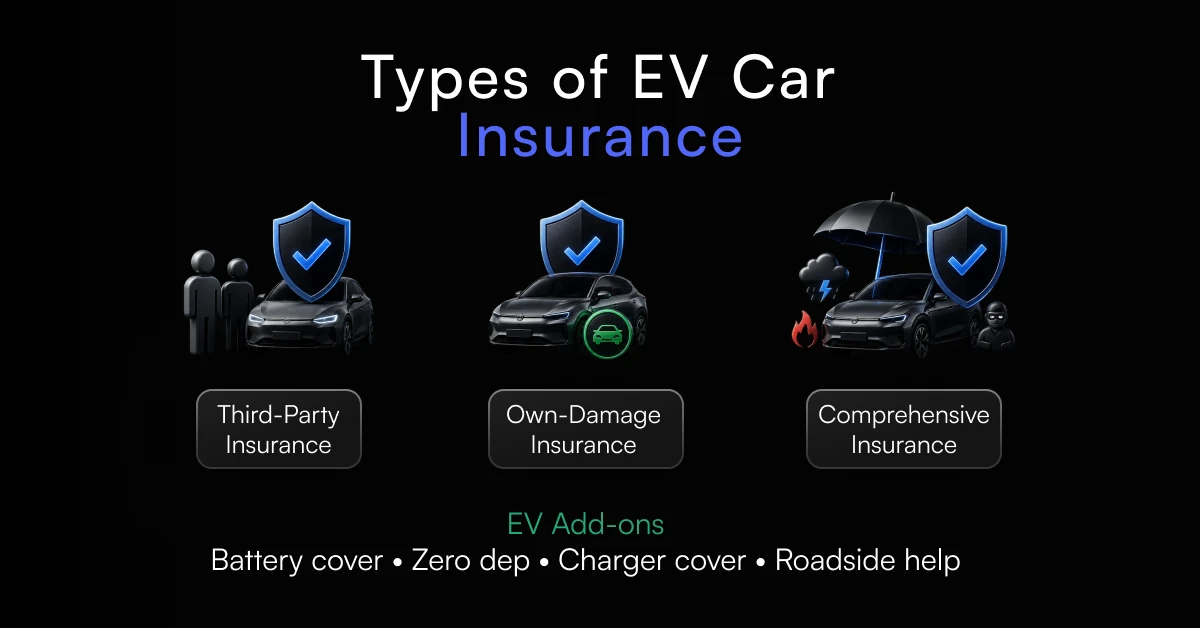
There are mainly three types of EV car insurance in India: third-party insurance, own-damage insurance, and comprehensive insurance.
- Third-party insurance: This is the basic insurance every EV owner must have. It covers damage caused to another person, vehicle, or property by your electric car, but it does not cover damage to your own EV.
- Own-damage insurance: Own-damage insurance covers damage to your own EV car. It can help if your electric car gets damaged because of an accident, fire, theft, flood, or natural calamity, depending on the policy terms.
- Comprehensive insurance: Comprehensive insurance gives wider protection because it includes both third-party liability and own-damage cover. You can also add features like battery protection, zero depreciation, charger cover, and roadside assistance.
What Should the Best EV Insurance Policy Cover?
The best EV insurance policy should cover more than just basic accident damage. Since an EV has expensive parts like the battery, motor, charger, and electrical system, the policy should protect both the car and the EV-specific components.
1. Third-Party Liability:
Yes. Third-party liability is the basic cover every car owner needs because it covers damage caused to another person, vehicle, or property by your EV.
2. Accident Damage:
Yes. A good policy should cover damage to your own EV car after an accident, including repair costs for covered body parts and components.
3. Theft:
Yes. If your EV gets stolen, the insurance policy should help recover the insured value of the car, based on the policy terms and IDV.
4. Fire Damage:
EVs have electrical parts and battery systems, so fire damage cover is quite important. It can help if your car is damaged due to fire, explosion or a covered electrical issue.
5. Flood and Natural Calamity Damage:
Yes. Flood, heavy rain, storm, and other natural calamity cover are important for EVs because water and heat can affect electrical and battery systems.
6. Battery Damage:
Yes, and this is one of the most important EV-specific checks. Battery damage may be covered under the base policy in limited situations or through a separate battery protection add-on.
7. Electric Motor Damage:
Yes. The electric motor is another important part of the vehicle, and your home charger, portable charger, or charging cable may need separate cover.
8. Roadside Assistance:
Yes. Roadside assistance is useful if your EV breaks down, runs out of charge, or needs emergency support on the road. Towing support is especially important because EVs need careful handling after battery or electrical damage.
9. Cashless Repairs:
Yes. Cashless repairs at network garages make the claim process easier because the insurer settles the approved bill directly with the garage.
10. Towing Support:
EVs need careful towing, especially if the battery or electrical system is damaged. A good policy should have towing support to a network or authorised garage.
What Is Not Covered in EV Car Insurance?
EV insurance covers many risks, but it does not cover everything. Reading exclusions is just as important as checking inclusions.
- Normal EV battery ageing is not covered because every battery loses health over time.
- Battery capacity loss is also not treated as an insurance claim. For example, if your EV range reduces slowly over the years, your insurance will not cover it.
- Regular wear and tear like tyre wear, brake wear or ageing of parts is not covered.
- Mechanical or electrical breakdowns are usually not covered unless they happen because of an accident or covered damage.
- Unauthorised repairs can affect your claim, especially if the battery or electrical system was repaired outside approved service centres.
- Damage from non-approved chargers may not be covered if the charger caused a fault or electrical damage.
- Driving without a valid licence can lead to claim rejection.
- Drunk driving is not covered under your EV insurance.
- Commercial use of a private EV can create claim issues if your policy is meant only for personal use.
- Intentional damage to the electric car is not covered.
How Much Does EV Car Insurance Cost in 2026?
The cost of EV car insurance in 2026 depends on the EV model, IDV, battery value, city, insurer, policy type, and add-ons.
For an EV car, third-party insurance premium is usually fixed by regulation and is based on your motor power of the vehicle.
But if you choose comprehensive insurance, the cost will be higher because it also covers damage to your own EV.
What Affects EV Insurance Cost?
- EV model: A higher-priced EV usually costs more to insure.
- IDV: Higher IDV means higher premium, but better claim value.
- Battery value: Expensive EV batteries can increase the insurance cost.
- City: Premiums may be higher in metro cities or high-risk areas.
- Policy type: Comprehensive insurance costs more than third-party insurance.
- Add-ons: Battery protection, zero depreciation and roadside assistance increase the premium.
- No Claim Bonus: If you did not make a claim last year, your renewal cost can be reduced.
Higher-priced EVs usually cost more to insure because their parts and repair costs are higher.hdfcergo+1
What is the typical price range?
Policy TypeApprox Annual PriceCost DirectionWhySmall city EV, third-party insurance₹2,000–₹3,500LowerOnly basic legal cover, no own-damage protectionSmall city EV, comprehensive insurance₹15,000–₹30,000MediumCovers accident, theft, fire, and natural calamitiesMid-range EV SUV, comprehensive + battery cover₹30,000–₹60,000HigherBattery, motor, and repair costs are higherNew premium EV, comprehensive + add-ons₹70,000–₹1.5 lakh+HighestHigh IDV, expensive parts, and more add-onsOld EV with No Claim Bonus, renewal policy₹12,000–₹35,000Can be lowerNCB can reduce own-damage premium
Why can the premium change so much?
A policy can cost more if the EV has a higher battery value, expensive parts, or a higher IDV. Add-ons like battery protection, zero depreciation, and roadside assistance also increase the premium.indusindinsurance+1
What Hidden Clauses Should You Check Before Buying EV Insurance?
Before buying EV insurance, check the policy details carefully. Hidden clauses can affect whether your claim is approved and how much payout you receive.iffcotokio+3
Does the policy really cover battery damage?
Check whether battery damage is fully covered or only covered in specific situations like accident, fire, flood, or electrical surge.ecofy.co+3
Does it include water damage?
This is very important in cities with monsoon flooding or waterlogging. Water ingress can damage the battery and electrical system, so confirm whether that risk is covered.hizuno+3
Is charger and cable damage included?
Your wall charger, portable charger, and charging cable may not be covered automatically. Check whether the policy includes charger cover or whether it must be bought separately.hdfcergo+1
Are non-approved chargers excluded?
Yes, in some policies damage caused by non-OEM or non-approved chargers may lead to claim issues. Always read this clause carefully.ecofy.co+2
How does IDV affect the claim?
A low IDV can reduce your premium, but it can also reduce your payout during theft or total loss. The cheapest policy is not always the safest one.indusindinsurance+1
Do repair conditions matter?
Yes. Some EV repairs must be done only at authorised or network garages, especially for battery and electrical work.hizuno+2
Can claim timing affect approval?
Yes. Late claim reporting can create problems, so inform the insurer as soon as possible after an accident or damage.indusindinsurance
How Can You Choose the Best EV Insurance Policy?
Choose EV insurance by looking at the cover, not just the price. The best policy should protect your EV battery, charger, motor, and repair costs properly.ecofy.co+3
Should you choose only by low premium?
No. A cheap policy may look attractive, but it may exclude important EV components. Always check what you are actually getting.hdfcergo+1
Is comprehensive cover better for most EV owners?
Yes. For most EV owners, comprehensive insurance is a better choice because it covers both damage to others and damage to your own EV.hdfcergo+1
Which add-ons are most useful?
The most useful EV add-ons are:
- Battery protection.
- Zero depreciation.
- Charger cover.
- Roadside assistance.
These can help reduce repair costs during a claim.iffcotokio+4
Why is the garage network important?
Choose an insurer with a good cashless garage network and EV repair support in your city. EV repairs may need trained technicians, so network quality matters.hizuno+2
Should you read the exclusions carefully?
Yes. Pay special attention to battery damage, water damage, charger-related damage, and unauthorised repairs.iffcotokio+3
What Is New in EV Insurance in 2026?
EV insurance in 2026 is moving beyond basic motor cover. Policies and industry discussions are increasingly focused on battery protection, charger cover, water ingress cover, BMS failure cover, and performance-linked battery cover.energy.economictimes.indiatimes+4
What is battery protection cover?
Battery protection cover is designed to help with repair or replacement costs for the lithium-ion battery and related systems when covered events occur.iffcotokio+2
What is charger cover?
Charger cover can protect the EV charger installed with your car and may also include damage caused by certain covered events.indusindinsurance+1
What is BMS failure cover?
BMS, or Battery Management System, is critical to battery health and charging safety. Some 2026 EV insurance discussions now include BMS-related protection or related battery-system cover.energy.economictimes.indiatimes+1
What is performance-linked battery cover?
This is an emerging concept where claims may trigger if the battery underperforms within its guaranteed life. It is still developing, but it shows where EV insurance is heading.energy.economictimes.indiatimes
What Should You Do During an EV Insurance Claim?
During an EV insurance claim, safety should come first. If your EV is damaged in an accident, flood, or fire, do not touch exposed wires, battery parts, or damaged electrical areas.hdfcergo+1
What should you do first?
- Take clear photos and videos of the damage.
- Inform your insurer as soon as possible.
- File an FIR if needed.
- Use authorised towing.
- Move the EV to a network or authorised garage.
- Wait for the insurer’s inspection before starting repairs.
Why should you avoid charging after damage?
Do not charge the EV until it has been checked properly. Damaged battery or electrical systems can be dangerous if power is applied too early.hizuno+2
Why This Guide Matters for MyMotor Readers
For MyMotor readers, EV insurance should be treated as part of the total EV ownership cost, not just as a legal formality. The right policy protects the battery, charger, motor, and repair budget, which is exactly what EV owners worry about most.ecofy.co+3
How should MyMotor users think about EV insurance?
MyMotor readers should compare coverage, add-ons, garage support, and exclusions before choosing a policy. That helps them avoid hidden costs later and makes the ownership experience smoother.