
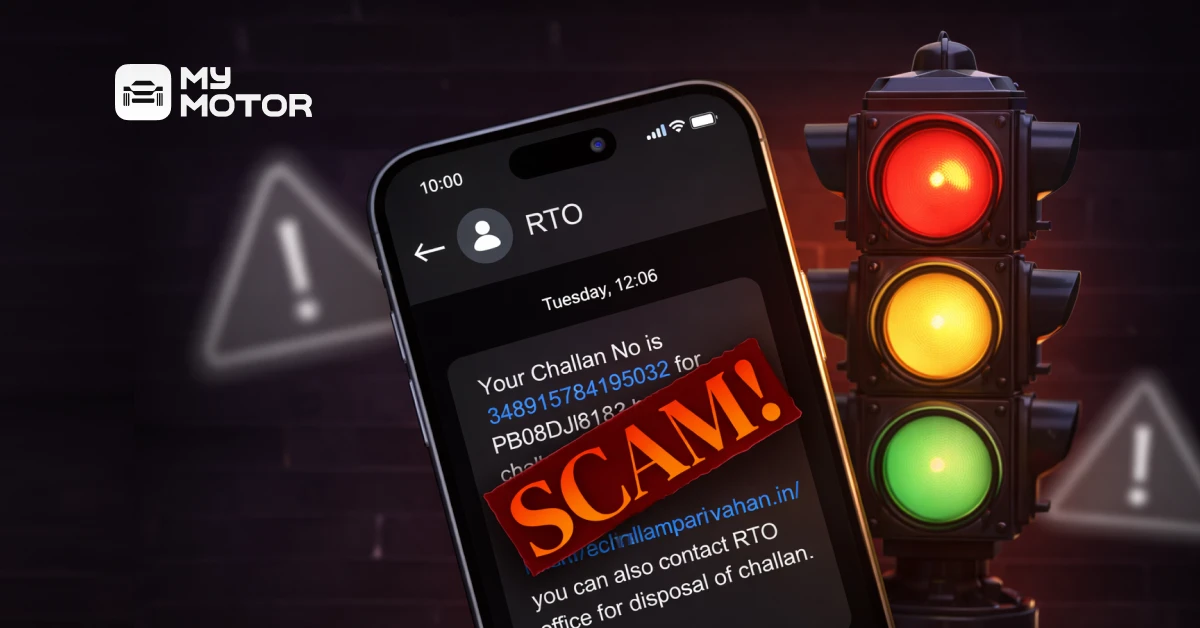
You get an SMS for a traffic fine. It looks official, tells you to pay urgently, and even has a link. Your first thought might be to just pay it and get it over with.
Stop right there.
In 2026, that message is as likely to be from a scammer as from the police.
This guide will cut through the confusion. We'll show you how the real e-challan system works, exactly how scammers trick people, and the simple checks you can do to protect your money. Stay updated on new traffic e-challan rules 2025 to avoid real fines.
Let's get started.
What Is an E-Challan and How Does the Official System Work?
An E-Challan is an electronic traffic violation notice issued by traffic police that you can check and pay online through official government websites or apps.
Earlier, a traffic cop would stop you, write a slip by hand, and you'd have to go stand in line at the police station to pay it. Now, cameras catch the violation, and the fine comes to you as a message.
To ensure the message you received is legitimate, you should always cross-verify it against the official database. You can check your pending e-challan status safely on MyMotor by simply entering your vehicle number and You can pay it online from your home, just like you pay a phone bill.
This system was made to make things easier for everyone.
But because so many of us are paying online now, scammers have also found a way to create fake e-challans to trick people. That's why it's really important to first know what the real thing looks like.
Now, let's look at why the real e-challan system is actually a better approach than its traditional counterpart.
What Are the Key Benefits of the Official E-Challan System?
The real e-challan system saves you time, shows you clear details about your fine, and is better for the environment by cutting down on paper.
Here’s why the official system is helpful:
- You can pay from anywhere: No more taking half a day off to go to the traffic police station. If you get a real e-challan, you can pay it online in a few minutes using UPI, card, or net banking. It's as simple as shopping online.
- Everything is clear: The e-challan will tell you exactly what you did wrong (like "Signal Jump at MG Road" for example), the date, time, the amount, and sometimes even a photo. There’s no confusion or argument about the fine.
- Saves paper: Since everything is digital from the challan notice to the payment receipt, it doesn’t waste paper. It’s a small thing, but its good for the environment.
So, the real system is built to be convenient and fair. The problem starts when scammers create copies of this system to steal from you.
Let's understand how that scam works next.
What Is an E-Challan Scam in 2026?
An E-Challan scam is a cyber fraud where criminals send fake digital traffic fines via SMS, email, or WhatsApp to phish for financial details, steal money, or install malware.
Think of it like a really good duplicate of a ₹500 note. From a distance, it looks real. But if you know what to check, you can spot the fake.
Scammers are using this trick because they know everyone is paying fines online now and might panic when they see a challan.
Let's break down exactly what these scammers want and how they try to get it.
What Do Scammers Want from You?
The scammer’s goal is simple: to take something valuable from you. Usually, it's your money, your private information, or control over your phone.
They are not sending these fake messages for fun. They have a clear target:
- To take your money: This is the most common goal. They want you to pay the fine directly into their bank account or UPI ID. Once you send the money, it's gone.
- To steal your information (Phishing): The payment link might take you to a website that looks like the real Parivahan site. When you type in your card number, CVV, and OTP, they steal it all. Later, they can use this to empty your bank account.
- To install malware on your phone: Sometimes, the message has an attachment saying it's your challan copy. If you download it, it could install a virus on your phone. This virus can then steal all your passwords, messages, and photos.
So, how do they actually do all this? Let's follow their step-by-step plan.
How Does a Typical E-Challan Scam Work Step-by-Step?
A typical e-challan scam works by sending a fake, urgent-looking message with a link to a copycat website where you enter your payment details, which the scammers then steal.
Here’s how the whole trick usually plays out:
- The fake message arrives: You get an SMS, WhatsApp message, or email. It looks official, might even have a government logo. It says you jumped a red light or were speeding, and you have to pay a fine, say ₹1,500.
- They create panic: The message uses urgent words like "Pay now to avoid legal action!" or "Your vehicle will be seized!". This makes you scared, so you don't think clearly.
- You click the link: The message has a link to "pay your fine." The link might look almost real, like ‘parivahan-payment.info’ instead of the real ‘parivahan.gov.in’ for example.
- You land on a fake website: The website is a perfect copy of the real traffic police payment page. It asks for your vehicle number, then your card details or UPI info.
- You lose money or data (or both): When you enter your details and the OTP, the scammers capture it. Your money gets sent to their account instantly. Or, if it's a malware link, your phone gets infected.
What tricks do they use to make it look real?
- Fake sender IDs: The SMS might come from a number that looks like a government shortcode (like "TP-POLICE").
- Phishing links: Links that go to fake websites with almost correct names.
- WhatsApp messages: Scammers send these directly on WhatsApp with a QR code to scan and pay.
- Email Attachments: An email might have a file to download called "challan.pdf," which is actually a virus.
Now you know how the scam works from the scammer's side. The next step is to learn how to spot their trick before you click anything.
Let's look at the red flags.
What Are the Red Flags of a Fake E-Challan in 2026?
Key signs of a fake e-challan include messages from non-.gov.in senders, urgent payment threats, suspicious payment links, and requests for payment via UPI IDs or wallets instead of official government portals.
Scammers often use the names of specific states to sound more convincing. If you receive a notice claiming to be from a particular region, refer to our dedicated guides for the Delhi Traffic Fine List, Maharashtra E-Challan Rules, or UP Traffic Penalties to see what a real state-level notice actually looks like.
Scammers are good at copying the look, but they always make small mistakes. If you keep an eye out for these red flags, you can stop yourself before you click or pay.
1. How to Spot Suspicious Sender Details and Urgent Language?
If the message is full of threats and came from a personal phone number or a strange email, it's almost always a scam.
The message comes out of nowhere. You get an SMS or email about a challan for a violation you don't remember doing. A real e-challan is usually generated by a traffic camera or a police officer, so you might have some idea. Common for violations like underage driving fines.
They try to scare you with very strong, urgent language. Look for phrases like:
- Pay now to avoid legal action!
- Your vehicle will be seized!
- Immediate payment is required to stop court case!
Real government notices give you a proper due date. And more importantly, they don't threaten you.
The sender details look suspicious. Check the email address or SMS number.
- Real emails will come from an address ending in .gov.in more than likely.
- Fake emails will use public domains like @gmail.com, or @yahoo.com.
Real SMS often come from a shortcode. Fake SMS usually come from a normal 10 digit mobile number.
2. What Makes URLs and Payment Gateways Suspicious?
The biggest trap is the payment link. If you click it, you land on the scammer's fake website.
- The message will have a link to "pay your fine." Never click on links in unsolicited messages.
- If you look at the link, you'll see the problem. Scammers use names that look real but are fake.
- Even if you land on a page that looks perfect, with government logos, check the payment options. In recent scams, the payment page only asks for Credit/Debit Card details and doesn't redirect you to secure gateways like Razorpay or BillDesk.
3. Why Are Requests for UPI or Personal Details a Scam Sign?
Real traffic police don't ask for payment via UPI IDs or your personal details like Aadhaar or PAN over SMS.
- A very clear sign of a scam is if the message asks you to pay by sending money to a UPI ID (like ‘scammer@oksbi’ for example) or via Paytm/Google Pay. Official government portals never ask for payment like this. They use proper payment gateways on their website.
- A real e-challan payment portal will ask for your vehicle number and maybe your driving license number to find your challan. A fake portal might immediately ask for your full card number, CVV, expiry date, and OTP on the first page itself. Never enter these details on a site you reached via an SMS link.
- Spelling mistakes is another big one. Read the message carefully. Official messages are written properly. If you see spelling or grammar mistakes, it's a sign it's fake.
Spotting these signs is your first line of defense. But what should you do to be 100% sure and pay safely?
Let's talk about the right way to check and pay your challans.
How to Safely Verify and Pay E-Challans in 2026?
To verify and pay an e-challan safely, manually visit the official Parivahan or state RTO website (look for .gov.in), use the 'Check Challan Status' feature with your vehicle number, and use the site's secure payment gateway.
So, you got a message and you're not sure. Maybe you even clicked a link but closed it fast. What now?
Follow this plan. It's your step-by-step guide to paying only what you actually owe, and doing it safely.
- First, the golden rule you must remember: Never, ever pay through a link in an SMS, email, or WhatsApp. Scammers control those links. Instead, you take control.
- Open your phone or computer browser. Type in the address for the Mymotor App or official national transport website or your own state's traffic police website. These are the only real places to pay. Once you're there, look for the option that says something like "Check Challan Status on MyMotor" or "E-Challan Payment."
- This is where you do a manual check. Enter your vehicle registration number. The website will show you a list of any real fines against your car or bike. You can see the date, the place, what the violation was, and the correct amount. If you see a fine that matches the message, you can pay it right there on the official site using their payment system.
Look for the padlock symbol in your browser's address bar to be sure it's safe.
If you don't see any fine on the official site, then the message was a fake. Just delete it. You have nothing to pay.
What Should You Do If You Clicked a Suspicious Link?
If you clicked a link in a fake e-challan message, do not enter any information or OTP. Immediately report the fraud to the cyber crime authorities.
Okay, so maybe you clicked the link before you realized it was a scam. Don't panic, but act quickly. Here's what to do right now:
- Do not pay anything: Even if the fake website is showing a payment page, close it immediately. Do not type in your card number, CVV, or UPI PIN.
- Do not enter any OTP: If any site or person calls you asking for an OTP after you clicked, it is a scam. Never share an OTP.
- Report the fraud: Go to the official national cyber crime reporting portal and file a complaint. Give them details like the phone number that sent the SMS or a screenshot of the message.
- Inform the traffic police: You can also call your local traffic police helpline and tell them about the fake message. This helps them warn others.
- Block and delete: Block the phone number that sent you the SMS and delete the message.
What if you already entered your card details?
Contact your bank right away. Tell them you think your card details were stolen in a phishing scam. They can block your card and stop any transactions.
If license affected, learn RC transfer steps. If a scammer has gained access to your vehicle's digital records, it can complicate legal processes later. Make sure your vehicle's documentation is secure by following our Guide to Mandatory Driving Documents.
Now, let's talk about why paying your real fines is still something you should do on time.
Why Should You Pay Genuine E-Challans on Time?
Paying genuine e-challans is important to avoid accumulating late fees, prevent driving license suspension, and stay clear of potential legal action from traffic authorities.
After all this talk about scams, let's be clear: this doesn't mean you should ignore real fines.
If you have a real e-challan, paying it on time is the smartest thing you can do.
Here's what happens if you don't - see our guide on unpaid traffic challan late fees:
- Unpaid challans don't just sit there. They keep adding late fees on top of the original fine. A ₹500 fine can quickly become ₹1000 or more.
- If you let many fines pile up, the RTO can suspend your driving license. Getting it back is a long and difficult process.
- For persistent non-payment, the traffic police can take legal action. This could mean court cases and even more serious penalties.
Ignoring legitimate fines can eventually lead to your case being transferred to the judicial system. If your challan is no longer appearing on the police portal, it may have moved to a different stage. Read our guide on How to Dispose of Court Challans via Virtual Court Online to settle them legally.
So, once you know a challan is real, pay it.
And a simple tip: always save the payment receipt. Take a screenshot or download it. Cross-check your RC details on MyMotor anytime to track updates.This is your proof in case there's any system error later.
Being a smart driver means both following traffic rules like signs and signals and being sharp about online scams.
Conclusion
Enjoy the ease of paying fines online, but don't let your guard down. Scammers are good at creating fake messages that look real. Now you know how to spot them.
Remember, never click on a link in a message. Always go to MyMotor App or official sites to check and pay.
A few seconds of checking can save you from a big scam.
Drive safe, and pay smarter.
State-Specific Verification Guides - Direct Safety Check Link
1. Karnataka (Bangalore) - Check Karnataka E-Challan Status
2. Tamil Nadu (Chennai) - Check TN Traffic Fine Details
3. Telangana (Hyderabad) - Check Telangana E-Challan Portal
4. Gujarat (Ahmedabad) - Check Gujarat Traffic Fines
5. West Bengal (Kolkata) - Check West Bengal E-Challan