
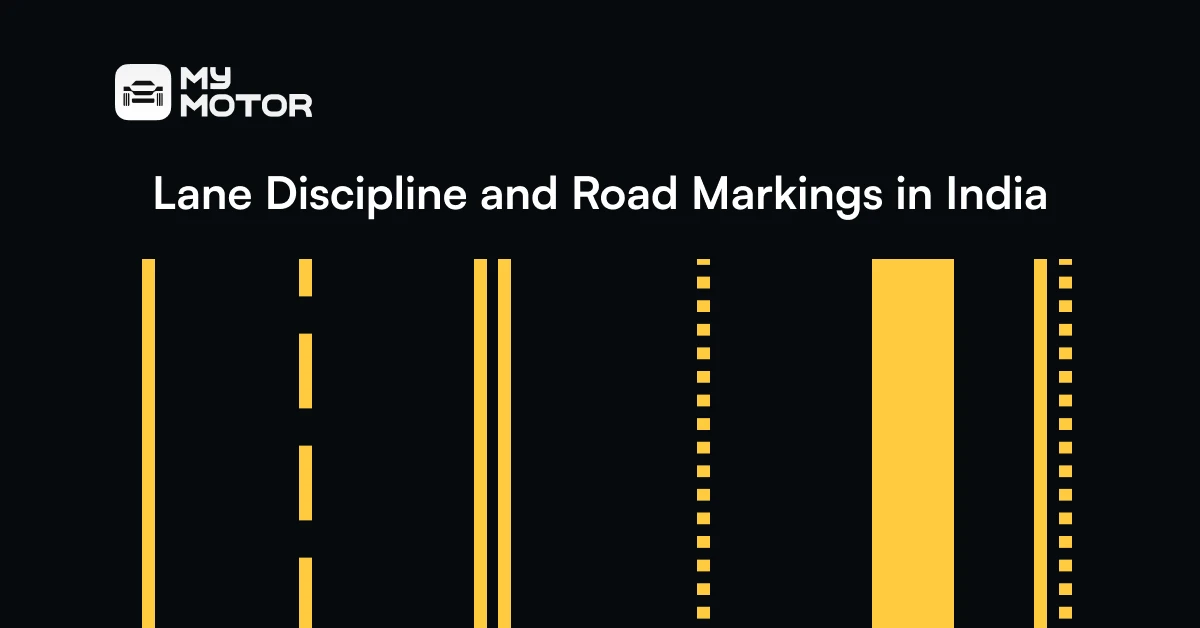
When you’re driving in India, understanding road markings and staying disciplined in your lane isn’t just about following rules, it keeps everyone safer. From what a solid white line means to how to use zebra crossings properly, here’s a simple guide to help you drive smarter and more confidently.
What Is Lane Discipline & Why Does It Matter?
Lane discipline means keeping to your designated lane, overtaking only when allowed, and respecting the road markings. Good lane discipline reduces accidents, prevents chaos, and makes traffic flow smoother especially on busy highways and city roads. understanding traffic rules in India can further improve your safety and awareness.
India’s roads come in many forms - single-lane rural roads, multi-lane highways, expressways and each has its own lane system. According to TATA AIG’s lane-system breakdown: in a three-lane road, for example, one lane is often intended for overtaking, another for regular traffic, and the third for slower vehicles.
These patterns follow basic RTO rules for lane driving, which every driver should know.
If drivers don't follow lane discipline (cutting lanes abruptly, overtaking irresponsibly), it increases the risk of collisions, reduces traffic efficiency, and can be very dangerous at junctions or roundabouts.
What Do Different Road Markings Mean? (Meaning of Road Markings)
Road markings are painted lines or symbols on the road surface. They tell you where you can drive, where to stop, and where pedestrians may cross. These markings form a kind of “road language” that guides drivers safely.
Along with Indian traffic signs and symbols, these markings create a visual language that drivers must understand.
Here are some of the most common:
- White Broken Line: Used to separate lanes moving in the same direction. It is permissive, so you can cross or change lane when it's safe.
- White Solid Line: Indicates “do not cross” - lane changes are restricted.
- Double Solid Line (White or Yellow): Strict no-overtake zone. Vehicles should not cross these lines under any circumstance.
- Edge Lines: Mark the boundary of the road. According to Meghalaya road manners, these help drivers maintain their lane, especially in low visibility.
- Stop Line: A thick white line painted on the road to indicate where vehicles must stop at signals or crossings.
- Zebra Crossing: Alternating white stripes that mark pedestrian crossing zones. Vehicles are required to stop and give way to pedestrians here.
- Box Junction: Marked with diagonal yellow lines within a box means you should not stop inside the box, or you may block traffic.
Note: Crossing these markings in banned zones can lead to common lane violation challans and penalties.
What Does a Solid White Line or Yellow Line Mean?
A solid white line means you should stay in your lane and avoid overtaking. A solid yellow line usually indicates a no-cross or no-overtake zone, often used for road safety in risky sections.
- Solid White Line: According to road-marking standards, this line is restrictive. Drivers are not supposed to switch lanes or overtake over this. It might mark lane boundaries or the edge of the road.
- Solid Yellow Line: Used to indicate no-overtake zones, especially on undivided roads. As the Puducherry traffic police explain, if there are double yellow lines, neither side may cross.
- Combination of Solid and Broken Lines: If your side has the broken line, you may overtake when safe; if your side is solid, you must not cross.
What Are the Rules for Overtaking on Indian Roads?
Overtaking is allowed only when the road markings permit, visibility is clear, and it’s safe. You must not overtake if there’s a solid line, on a curve, or near zebra crossings. Breaking these rules can result in fines, so it is wise to check and clear your traffic challans online regularly
According to common highway driving rules:
- Overtake from the right side, not left.
- Do not overtake when road markings disallow it e.g., solid lines or near pedestrian crossings.
- Before overtaking, signal and ensure the road ahead is clear.
- Avoid overtaking on curves, intersections, or slopes where visibility is low.
Following these rules helps reduce risks of head-on collisions or dangerous cuts.
What Are the Zebra Crossing Rules for Pedestrians and Drivers?
Zebra crossings are designated pedestrian zones marked by white stripes. Drivers must stop for pedestrians waiting or crossing and always give right of way when they are on the crossing.
Zebra crossings are painted parallel white and black/white stripes and serve as pedestrian crosswalks.
Under Indian traffic rules:
- Vehicles must stop before the stop line (if present) to let pedestrians cross.
- If pedestrians are waiting to cross, it's the responsibility of vehicles to give them right of way.
- Drivers must not obstruct the crossing by stopping over it especially at signal lights.
Many of these behaviours are also covered under Indian traffic fines and challans, which you can track digitally.
Sadly, many crossings fade or are ignored, creating danger for pedestrians.
Why Do Some Drivers Ignore Lane Markings & Zebra Crossings?
Many drivers don’t respect road markings because of poor awareness, faded paint, or lack of strict enforcement often leading to higher risk and confusion on Indian roads.
- Road markings can fade over time, especially zebra stripes making them hard to see.
- Some motorists simply don’t understand the meaning of different lines (solid vs broken) and overtake incorrectly.
- Enforcement is inconsistent. Without patrolling or camera-aided monitoring, drivers may flout lane discipline.
- In rush hours, drivers may make unsafe lane changes, especially when the broken lines allow overtaking.
If you are unsure whether a camera has captured a violation, an online challan check helps you verify and pay in time.
How Can You Improve Your Lane Discipline While Driving?
Practice patience, follow the road markings strictly, use turn signals, and only overtake when the road allows. Respect zebra crossings and always drive defensively to avoid panic lane changes.
Here are some simple yet effective tips:
- Always keep your eyes on road markings, not just traffic.
- Use your indicator whenever changing lanes, even if lanes are divided by broken lines.
- Don’t overtake when road ahead is curved or visibility is low.
- Stop well behind the zebra stripes when there are pedestrians.
- Slow down near junctions, school zones, and pedestrian crossings.
- If you drive regularly, take a refresher course or watch road safety videos - it helps!
You can also read detailed traffic safety guides for Indian drivers to refresh key rules.
Staying disciplined on the road also protects your wallet by reducing the chances of traffic fines and penalty challans.
Why You Should Respect Lane Lines and Markings
Understanding road markings whether it's a solid white line, a zebra crossing, or a broken line is not just for exams. It’s about keeping yourself and others safe. When you follow the rules, you reduce your risk of accidents, make highway driving smoother, and protect pedestrians.
Be a responsible driver:
- Pay attention to road signs and markings
- Stick to your lane
- Overtake only where allowed
- Stop for pedestrians at zebra crossings
To stay compliant and avoid surprises, regularly check your traffic challan status online and keep all your vehicle documents organised in one place.