
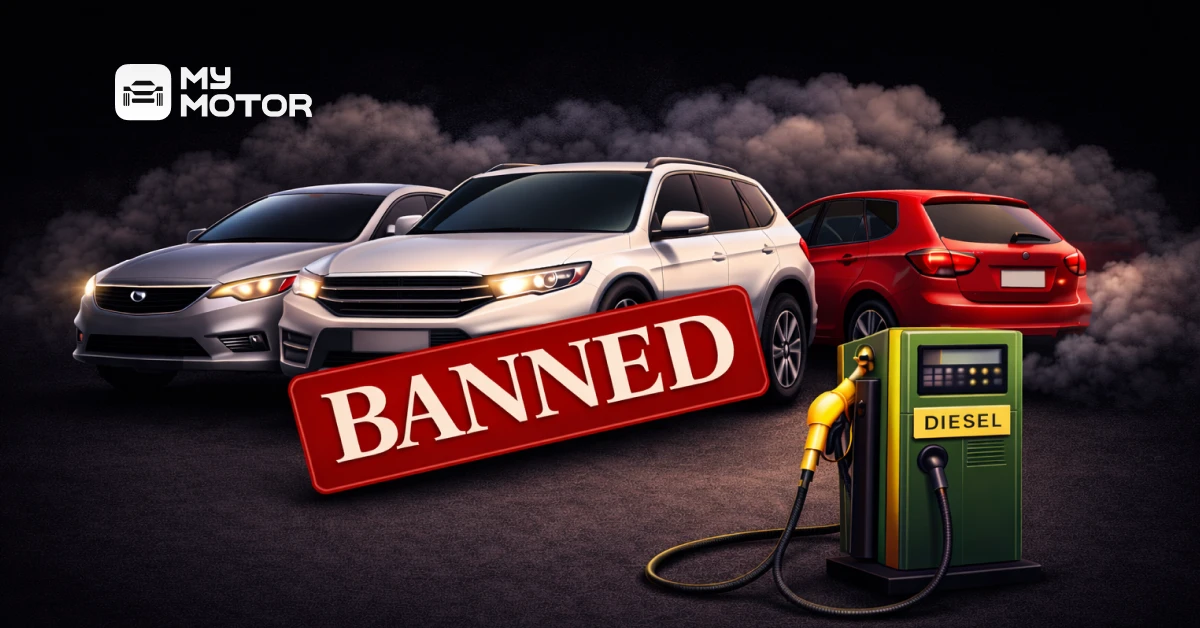
You might have heard the news or read some headlines somewhere along the lines of ‘diesel cars could be banned in India soon.’ Maybe even before 2027.
It sounds like a big step for clean air. But a change this big, this fast, doesn't happen without some serious bumps in the road.
Let's talk about what those bumps really are for you, for car companies, and for the country.
Why Is a Diesel Car Ban Being Discussed in India?
A diesel car ban is being talked about because of really bad air pollution and global promises to fight climate change.
Here’s why this has become such a big topic:
- Diesel engines are a main reason for bad air in cities like Delhi and Mumbai. They release a lot of nitrogen oxides (NOx) and tiny harmful particles. This stuff causes smog and can lead to serious breathing problems like asthma.
- India has signed global agreements like the ‘Paris Agreement’ to cut down on pollution. Since diesel cars are heavy polluters, phasing them out is one way to try and meet those promises.
- The government is pushing hard for EVs and is giving benefits for them. A diesel ban would push people faster towards buying electric or other clean cars like CNG instead.
- In 2023, Union Minister Nitin Gadkari himself suggested banning diesel vehicles in big Indian cities by 2027.
Right now, this is a strong suggestion, not a final law. It clearly shows what the government is thinking.
If you don't get why this is happening, you might be confused when your diesel car's value starts falling or when everyone starts talking about electric cars.
This is a serious plan that will change what we drive.
What Challenges Do Current Diesel Car Owners Face?
If a diesel ban happens before 2027, people who own a diesel car today will face some immediate and big problems. The biggest hit will be to your wallet, whether you drive for your family or for your business.
Let's look at the main challenges you might face:
1. Your car's resale value could crash
Right now, the moment there is serious talk of a ban, the demand for second-hand diesel cars starts falling. If a ban is officially announced, the value of your diesel car could drop very fast. This means if you planned to sell your car in a few years, you might get a much lower price than you expected.
Check current used car valuations on MyMotor's Used Car Price Guide to assess your diesel SUV's drop.
2. You might miss the diesel mileage
A lot of people, especially those who drive long distances for work or travel, choose diesel because it gives more kilometers per liter. If you have to switch to a petrol car, your fuel cost for the same distance will likely go up. Electric cars are cheap to run, but their upfront cost is high and they might not be practical yet for very long trips without reliable charging on the way.
3. Changing your car will cost more
Diesel engines are known to be strong and often need less frequent maintenance than petrol engines, which can save money in the long run. Switching to a petrol or electric vehicle could mean different and sometimes higher maintenance costs. For an electric car, the big cost later on is replacing the battery.
4. A big problem for taxi and truck owners
This is not just about personal cars. Many taxi fleets, delivery vans, and small trucks run on diesel because of their mileage and power. A sudden ban would hit these commercial owners very hard. They would have to change their whole fleet at once, which is a huge financial strain, and their business could get disrupted while they switch vehicles.
These challenges will directly affect the plans and savings of crores of people and businesses who depend on diesel run vehicles every day.
This kind of change doesn't just stop with car owners. It shakes up the entire car-making industry.
Let's see how.
How Would Diesel Ban Ripple Effects Impact Automakers & Economy?
A sudden diesel ban would shake up the entire car industry and parts of the economy, because a lot of money and jobs are tied to making and selling diesel vehicles.
Here’s how the ripple effect would work:
- A huge part of the industry relies on diesel. The automobile sector adds about 7% to India's GDP. Popular SUVs and almost all trucks and commercial vehicles sold today run on diesel. The entire business model for many companies is built around this.
- Recent investments would go to waste. Big car brands like Hyundai, Tata, Mahindra, and MG spent crores of rupees recently to make their diesel engines comply with the latest BS6 Phase 2 emission norms.A ban before 2027 would make that investment pointless. It also sends a bad signal to companies about investing in India in the future.
- Jobs in diesel manufacturing are at risk. Factories and workers who specialize in making diesel engines and their parts could face job losses or need retraining. The shift to making EV parts will create new jobs, but not overnight and not in the same places.
- The entire supply chain gets disrupted. Thousands of smaller companies make parts like specific engine components, exhaust systems, and lubricants only for diesel vehicles. Their business would disappear quickly. Meanwhile, suppliers for EV parts might not be ready to scale up fast enough.
- It could slow down the whole industry. Forcing this change in just a few years doesn't give businesses time to adapt smoothly. The industry is still recovering, and such a big, fast policy shift could lead to confusion and slow down production and sales.
Forcing this change on the industry is one thing. But is the country itself ready with the basic support system for new types of cars?
Let's look at the biggest practical hurdle next.
What Infrastructure Gaps Make a Swift Diesel Ban Unfeasible?
India's support system for electric and alternative vehicles isn't ready for a sudden switch from diesel. The charging stations, repair networks, and fuel options needed are still developing.
The main gaps are:
- Too few EV chargers: There are only about 12,146 public EV charging stations nationwide. This is insufficient for metros and severely lacking in smaller towns. Finding a reliable charger is still a common worry. Find nearby stations via MyMotor's EV Charger Locator and see why India needs 10x more for a smooth shift.
- Limited CNG/Ethanol stations: The network for these alternative fuels is not widespread enough to support a massive, rapid shift from diesel.
- Unready service networks: Skilled mechanics, spare parts, and battery recycling for EVs and hybrids are scarce compared to the well-established system for diesel vehicles.
- Remote areas get left behind: Hilly and remote regions rely on diesel and lack the basic infrastructure for other technologies. A ban would cut off essential transport there.
- Few practical alternatives: Strong hybrid cars are expensive and models are limited. They don't yet match diesel's power and long-range capability, which many buyers need.
Without fixing these basic issues, a pre 2027 ban would create more problems than it solves.
So, with these gaps in mind, what are the actual workable paths forward?
Let's look at the real alternatives.
What Viable Alternatives Exist to a Sudden Diesel Ban?
Instead of a sudden stop, a smarter approach would be to use a mix of cleaner technologies and supportive policies over a longer period. This gives people and businesses time to adjust without losing their investment.
Here are the most workable paths forward, based on what experts are suggesting:
- Give better financial incentives. The government can offer bigger tax benefits, subsidies, and scrappage incentives for people who trade in their old diesel car for an electric, hybrid, or CNG vehicle. This directly lowers the high upfront cost that stops most people from switching. Explore subsidies with MyMotor's EV Incentive Calculator to lower your switch costs today.
- Start with a phased ban, not a national one. Instead of banning diesel everywhere at once, start only in the most polluted metro cities. This allows the rest of the country more time to build the necessary infrastructure and lets people plan their next purchase.
- Build a support system first. This is the most critical step. The focus must be on rapidly scaling up EV charging stations, CNG refueling points, and ethanol pumps. Without this, any ban will fail.
- Promote hybrid cars as a middle step. Hybrid vehicles use both petrol and electric power. They are more fuel-efficient than regular petrol cars and don't need charging infrastructure, making them a practical stepping stone for many families right now.
- Train a new generation of mechanics. Create large-scale training programs to build a skilled workforce that can service, repair, and maintain EVs and hybrids. This will solve the looming problem of who will fix these new cars.
- Learn from what's working. Campaigns like Delhi's "Switch Delhi," which successfully pushed electric two-wheelers and cars, provide a good model. This approach of awareness and local incentives can be expanded to other cities.
The main idea is that a transition this big needs preparation. The alternative isn't to do nothing, but to build the bridge before asking everyone to cross it.
What Are the Latest Policy Directions on Diesel Bans?
Right now, there is no official ban on diesel cars in India, but the government is seriously talking about strict rules to phase them out, especially in big cities, by 2027.
Let's look at where things currently stand:
1. The 2027 proposal is just a recommendation (as of yet)
A government panel called the Energy Transition Advisory Committee did recommend a strict diesel ban by 2027 for cities with over 10 lakh people. However, this is not a law. The government has not accepted this report yet. They say the suggestions are too fast-moving and need more discussion with car companies, state governments, and other experts. The final policy will likely be softer and more phased.
2. Global push is influencing India
Countries like France, Germany, and the UK have already announced they will ban diesel cars by the 2030s. Many of their cities have already started restricting old diesel vehicles. This global trend is putting pressure on India to also move in a similar direction, even if our timeline and method might be different.
3. Stricter emission norms are already here
India has already implemented the very strict Bharat Stage VI (BS6) emission norms, which are as tough as European standards. These norms make it much harder and more expensive to build diesel engines that are legal to sell. This rule itself is slowly making diesel vehicles less attractive for manufacturers and buyers.
Compare BS6 diesel vs. EV running costs using MyMotor's Fuel Cost Calculator for long-term savings.
What all of this means: While a sudden nationwide ban before 2027 is very unlikely, the direction is clear. The government wants to reduce diesel use. This means more rules on where you can drive them, higher costs, and a continued push for electric and hybrid vehicles through policies and incentives in the coming years.
Conclusion
Final take: A diesel car ban before 2027 is a very difficult goal.
The reasons for the ban are morally great. But doing it too fast causes big problems.
Diesel owners lose money on their cars, companies lose their investments, and the country doesn't have enough charging stations or mechanics for the new vehicles yet.
The smarter path is a slower, planned shift. Start with the most polluted cities, give people good incentives to switch, and first build the charging and service networks everyone will need.
The talks and new rules show things are moving away from diesel. For now, there is no ban. But if you own a diesel car or plan to buy one, it's smart to know that its long-term value and future use in cities could change.Get personalized advice on switching via MyMotor's Car Insurance for EVs or browse top hybrid models.